

1. Trading is a system, not a gamble
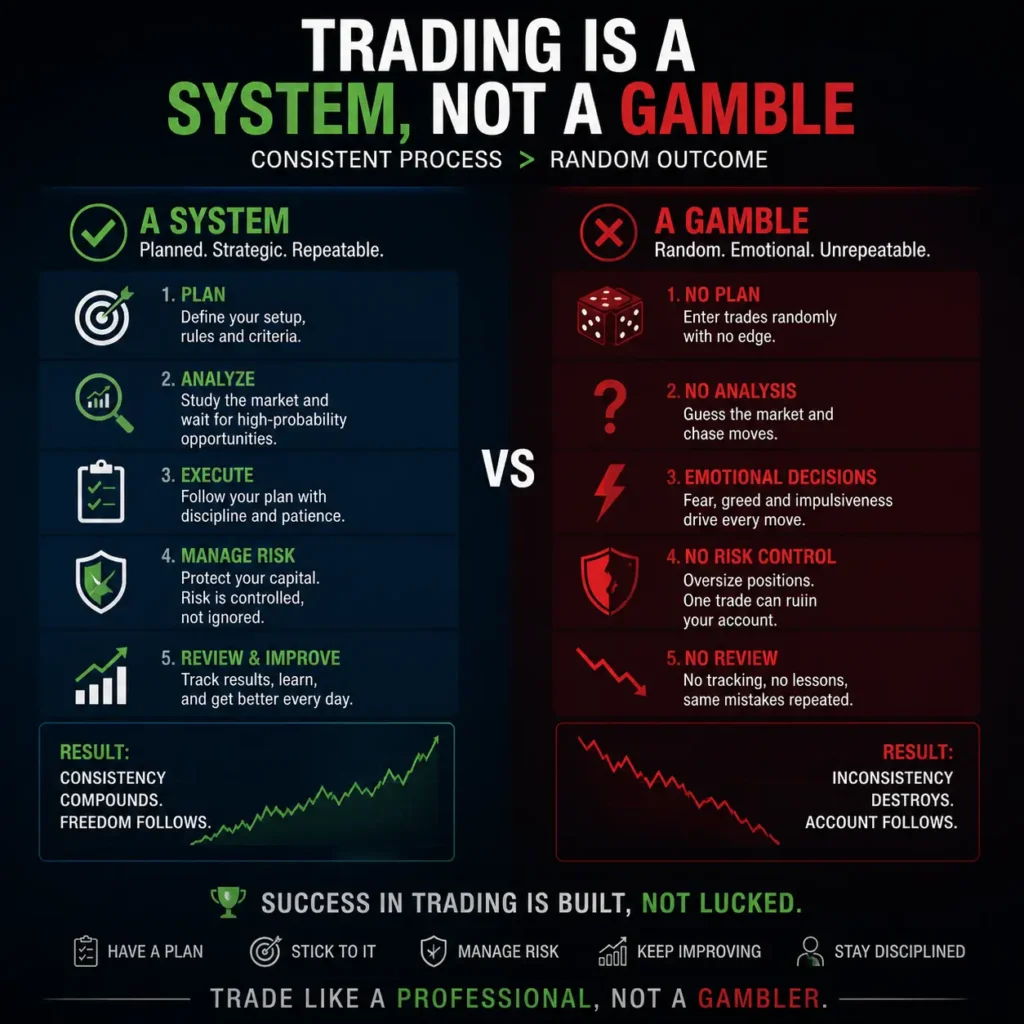
Most technical founders treat trading — whether of equity, data contracts, API access, or financial instruments — as a side activity reserved for later. That framing costs them compounding time they can never buy back. Trading operates on rules, signals, and feedback loops: exactly the systems you already build. When Stripe’s founding team negotiated equity swaps with early infrastructure partners instead of paying cash, they used trading logic to preserve capital and accelerate product velocity. They treated each deal as an asset exchange, not a transaction.
Define trading broadly: you exchange value (cash, equity, access, data, attention) for a position that compounds. That definition covers algorithmic trading desks, OTC token swaps, B2B barter agreements, and secondary-market equity sales. The mechanics differ; the underlying logic does not. At Series A, you possess three assets that institutional trading desks envy — speed, proprietary data, and optionality — and the founders who recognize this move faster than those who do not.
Real signal: Renaissance Technologies’ Medallion Fund averaged 66% annual returns before fees from 1988–2018 not through prediction, but through disciplined, rule-based that removed emotion from execution. The lesson scales down: systems outperform gut calls at every stage.
2. Proprietary data is your unfair trading edge

Series A companies generate signal that no public-market participant can access. Your churn data, usage heatmaps, and sales velocity numbers reflect real economic behavior before analysts model it. Founders who treat this as a trading asset — licensing data to financial institutions, using it to time secondary sales, or structuring data-for-equity partnerships — extract value others leave on the table.
Palantir’s early government contracts functioned as trading moves: the company exchanged equity-linked compensation and proprietary software access for long-term government data streams, then used those streams to deepen product moats. By the time Palantir reached IPO, it held data positions most competitors could not replicate. That compounding started at the Series A equivalent of government funding rounds, not at scale.
Your trading thesis should answer three questions before you execute any deal: What data or access do I hold that a counterparty values more than I do? What do they hold that compounds for me? And what structure — equity swap, revenue share, data license — captures the most long-term value? Founders who answer these questions before negotiating consistently win better terms than founders who optimize only on headline price.
Founder example: Robinhood used its order-flow trading data as a direct revenue asset through payment-for-order-flow agreements, generating $331M in transaction-based revenue in 2020 Q3 alone — capital that funded growth without dilutive fundraising.
3. Speed compounds: why trading velocity matters more than deal size
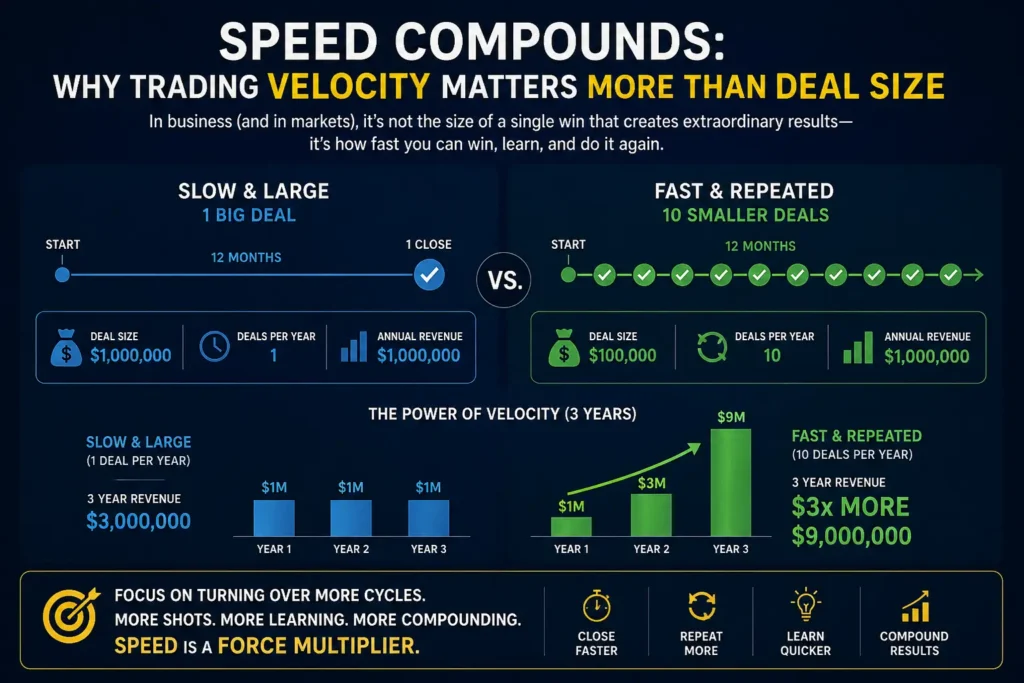
Institutional trading desks do not optimize for single large wins. They optimize for execution frequency, because more trades at a high win-rate beat fewer trades at a higher margin. Series A founders who internalize this principle build parallel trading pipelines — simultaneous partnership negotiations, staggered data licensing conversations, layered equity structures — instead of sequentially pitching one opportunity at a time.
Twilio ran this playbook precisely. During its growth phase, Twilio negotiated SMS and voice trading agreements with carriers across dozens of markets simultaneously, accepting thinner margins on individual deals in exchange for coverage breadth. That coverage became a defensible network effect: no single competitor could replicate the density fast enough. The strategy required treating carrier negotiations as trading positions — each deal a position in a portfolio, not a standalone outcome.
Technical founders underestimate their velocity advantage. A 12-person team makes decisions in hours that a 500-person enterprise makes in quarters. Applied to trading cadences, that speed advantage translates directly into more iterations, faster feedback on deal structures, and higher learning rates. You identify which trading structures produce positive outcomes faster than anyone you compete against. Exploit that window aggressively before headcount growth slows your decision loops.
Speed data: According to research by First Round Capital, companies that closed their Series A in under 90 days generated 2.1x higher revenue multiples at Series B than those that took 180+ days — velocity in capital trading directly predicted downstream valuation.
4. Structure every trade to survive the downside scenario
Trading without downside protection does not compound — it blows up. Every professional trading operation sizes positions relative to total capital at risk, maintains exit thresholds before entering a position, and sets hard rules that override emotional attachment to a thesis. Founders apply this discipline inconsistently, which explains why well-reasoned partnership deals, equity swaps, and data agreements so often destroy the value they were designed to create.
Structure your trading agreements with three explicit terms before you sign anything: the trigger that unwinds the deal if conditions change, the maximum capital or equity exposure you accept regardless of upside, and the specific metric you track to know the trading position performs. WeWork’s collapse resulted partly from structuring real-estate trading positions — long-term leases sold as short-term assets — without any downside trigger. The structure worked in an appreciating market and catastrophically failed the moment conditions shifted.
The founders who build durable companies at Series A treat capital, equity, data, and access as a trading portfolio — each position sized, monitored, and exitable. They do not view partnerships as permanent commitments immune from reassessment. They do not hold equity positions out of loyalty when fundamentals change. They execute trading discipline at the partnership table the same way they execute engineering discipline in their codebase: with explicit rules, observable metrics, and the willingness to cut losses faster than competitors will.
Framework in practice: Benchmark Capital’s early trading of equity positions in eBay — buying at $6.7M post-money, structured with board seats and anti-dilution rights — produced $5B at IPO. The return came from position structure, not just company quality.
The founders who win Series B are not the ones who raised the most at Series A — they are the ones who traded their Series A capital, data, and access into compounding positions no late entrant can unwind. Start treating every deal, partnership, and negotiation as a trading decision, and your next round becomes optional
if you have any questions or wants to learn more about our upcoming projects, feel free to visit our contact us page.”